Biografia
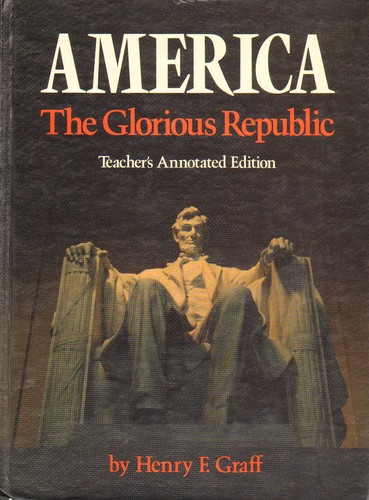
Henry Franklin Graff (August 11, 1921 – April 7, 2020) was an American historian who served on the faculty of Columbia University from 1946 to 1991, including a period as chairman of the History Department. Graff specialized in the history of the Presidency of the United States and of American foreign relations. His pioneering “Seminar on the Presidency,” one of Columbia's most popular courses, was attended by President Harry Truman in 1959 and President Gerald Ford in 1989. Graff has twice served as chairman of the Pulitzer Prize jury in American history. In 1965, President Lyndon B. Johnson appointed Graff to the National Historical Publications Commission, and in 1993 President Bill Clinton appointed Graff to the President John F. Kennedy Assassination Records Review Board. In 2005, Graff received an honorary doctor of letters degree from Columbia in recognition of his contributions to the field of American history, service to presidents and to the university. He died from complications brought on by COVID-19 during the COVID-19 pandemic. == Early life and education == Graff was born on August 11, 1921, in New York City, the son of Florence B. Morris and Samuel F. Graff, a salesman in the garment district in New York City. His parents were natives of New York, and of German Jewish extraction. He had a twin sister, Myra Balber. Graff attended George Washington High School and graduated from City College of New York, where he received a B.S.S. degree, magna cum laude, in 1941. He was elected to Phi Beta Kappa. He was studying for his master's at Columbia, as the first Jewish student in the History Department of the university, in 1942 when he enlisted in the army. He earned the degree later, and returned to teach at Columbia in 1946 and earned his Ph.D. in 1949. Graff recounted stories from his life here. == Military service == Graff enlisted in the army shortly after Pearl Harbor, and rose from private to first lieutenant in the Signal Corps prior to his discharge in 1946. As a result of studying Japanese at Columbia, he served as a Japanese language officer and cryptanalyst in the Signal Intelligence Service (SIS) (predecessor of the National Security Agency). In this role, he read foreign codes and ciphers, particularly the now famous Purple code. In November 1943, Graff translated part of a message which is well recalled in histories of the remarkable code-breaking successes of the American and British – that proved invaluable to the Allied planners in England. It had been sent by Lieutenant General Hiroshi Oshima, the Japanese ambassador to Germany, to the Japanese foreign minister in Tokyo, recounting in intimate detail what the ambassador had seen of German preparations in north France to repel the expected cross-Channel invasion force. He also translated a message from Japan to the Soviet Union, detailing Japan's plan to get out of the war. He received a War Department Citation and the Army Commendation Medal for his service. BBC no